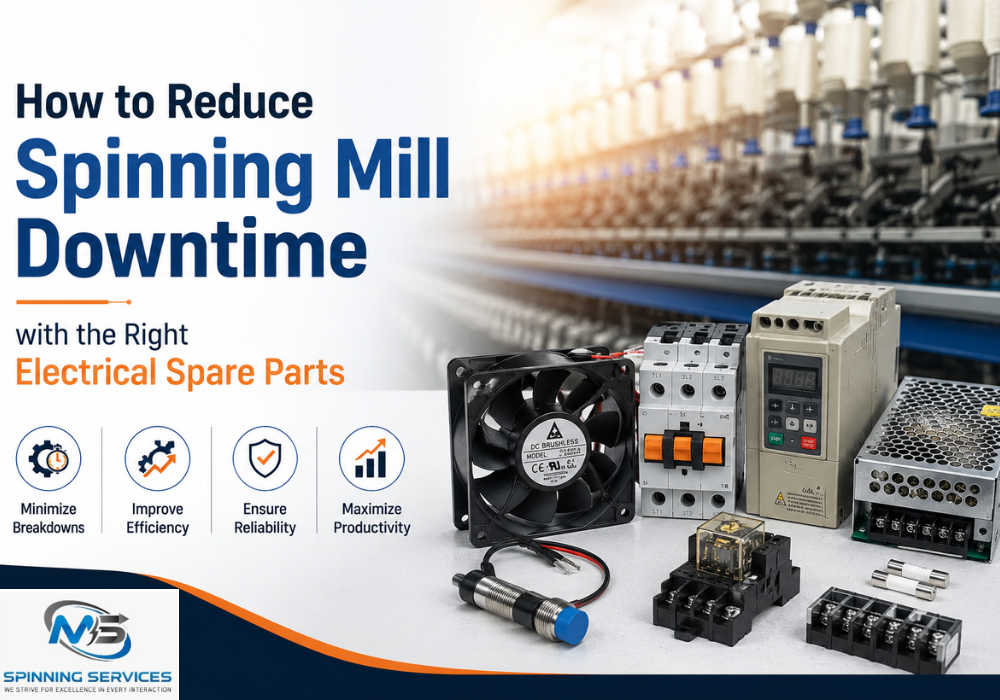
Every hour a spinning mill sits idle costs more than lost production; it costs missed orders, unhappy customers, and rising operational pressure. In an industry where machines run around the clock, unplanned downtime is one of the biggest threats to profitability. And more often than not, the root cause traces back to a single overlooked factor: outdated or low-quality electrical components.
The good news is that most downtime is preventable. With the right textile machinery spare parts, a proactive maintenance approach, and a reliable service partner, spinning mills can drastically cut unplanned stoppages and keep production lines running smoothly.
In this blog, we'll break down why downtime happens, which spare parts matter most, and how choosing genuine components can protect your machines and your bottom line.
Why Spinning Mill Downtime Happens
Spinning machines are complex systems built on a mix of mechanical and electronic components working together. When even one part underperforms, it can bring an entire production line to a halt. The most common causes of downtime include:
- Worn-out or damaged sensors that misread machine parameters
- Faulty VFDs (Variable Frequency Drives) causing inconsistent speed control
- Overheating due to failed cooling fans
- Damaged HMI panels disrupting operator control
- Loose or degraded sensor cables leading to signal errors
- Blown fuses and safety components from electrical overloads
- Worn motor bearings causing vibration and mechanical strain
Individually, these may seem like minor issues. But in a 24/7 production environment, even a small electrical fault can trigger hours of stoppage and repeated failures point to a bigger problem: the use of substandard or mismatched spinning machine spare parts.
The Real Cost of Using Low-Quality Spare Parts
It's tempting to cut costs by opting for cheaper, generic components. But in the long run, this often backfires. Low-quality parts tend to:
- Fail sooner, leading to frequent replacements
- Cause compatibility issues with existing machinery
- Increase the risk of secondary damage to connected systems
- Void manufacturer warranties
- Create unpredictable downtime that disrupts production planning
Genuine and properly matched spinning mill spare parts may cost slightly more upfront, but they deliver far greater reliability, longer service life, and fewer surprises on the shop floor.
Key Electrical Spare Parts That Keep Mills Running
Here's a closer look at the components that have the biggest impact on machine uptime:
1. Sensors
Photocell and proximity sensors monitor critical machine functions in real time. A faulty sensor can cause incorrect readings, triggering unnecessary shutdowns or, worse, letting a fault go undetected.
2. VFDs (Variable Frequency Drives)
VFDs control motor speed and energy consumption. When they malfunction, machines either run inefficiently or stop altogether. Timely reconditioning or replacement keeps speed control precise and energy costs in check.
3. Cooling Fans
Industrial electronics generate heat, and cooling fans prevent overheating-related shutdowns. A failed fan is one of the most common and most preventable causes of sudden downtime.
4. HMI LCDs & Touch Panels
Operators rely on HMI panels to control and monitor machines. A damaged or unresponsive panel can bring operations to a standstill until it's repaired or replaced.
5. Sensor Cables
Durable, high-performance cables ensure stable signal transmission. Worn or damaged cabling is a frequent, often overlooked, source of erratic machine behavior.
6. Fuses & Safety Components
These protect your machinery from power surges and electrical faults. Using the correct fuse rating prevents both nuisance trips and serious equipment damage.
7. Stepper Motors
Precision motors are essential for accurate spinning operations. Any deviation in their performance directly affects yarn quality and production consistency.
Stocking these electrical & electronics spare parts as part of a planned maintenance routine — rather than scrambling to source them during a breakdown — is one of the simplest ways to minimize downtime.
Preventive Maintenance: The First Line of Defense
Reactive repairs are expensive and disruptive. A preventive maintenance strategy helps mills stay ahead of failures instead of reacting to them. Effective preventive maintenance includes:
- Scheduled inspections of sensors, cables, and control panels
- Routine VFD servicing to catch early signs of wear
- Timely bearing checks to avoid mechanical strain
- Keeping critical spare parts in stock to avoid delays during emergencies
- Partnering with an experienced spinning services provider for regular audits
This approach shifts maintenance from a cost center to a productivity strategy — reducing both downtime and long-term repair expenses.
Why Choosing the Right Spinning Services Partner Matters
Spare parts alone aren't enough. The expertise behind sourcing, installing, and maintaining them makes an equally big difference. A trusted spinning services partner brings the following:
- Access to genuine and compatible components
- Technical guidance for selecting the right part for your exact machine
- Fast turnaround to minimize production loss
- On-site support for installation and troubleshooting
- A strong vendor network to source rare or discontinued parts
At MS Spinning Services, we supply a wide range of electrical and electronics spare parts — from sensors and VFDs to HMI panels and stepper motors — backed by expert guidance and quick delivery, so mills spend less time waiting and more time producing.
Final Checklist to Minimize Downtime
Before your next production cycle, run through this quick checklist:
- Are your sensors and cables in good working condition?
- Have your VFDs been serviced recently?
- Do you have critical spare parts in stock?
- Are cooling fans functioning properly?
- Is your maintenance schedule proactive, not reactive?
If you answered "no" to any of these, it may be time to review your spare parts inventory and maintenance plan.
Conclusion
Downtime in a spinning mill is rarely caused by one big failure; it's usually the result of small, preventable electrical issues left unaddressed. By investing in quality textile machinery spare parts, following a preventive maintenance routine, and working with an experienced service partner, mills can significantly reduce unplanned stoppages and improve overall efficiency.
Whether you need reliable spinning machine spare parts, expert servicing, or guidance on choosing the right components, MS Spinning Services is here to help keep your operations running without interruption.
Frequently Asked Questions (FAQ)
The most common causes are faulty sensors, damaged VFDs, failed cooling fans, and worn motor bearings — all of which can be minimized with quality electrical spare parts and regular maintenance.
Critical components like sensors, cables, and VFDs should be inspected regularly as part of a scheduled maintenance plan, rather than waiting for a breakdown to occur.
High-quality compatible parts can perform reliably when sourced from a trusted supplier, but it's important to ensure they match your machine's exact specifications.
Yes, we maintain a strong vendor network to quickly source and supply components that may not be readily available, minimizing delays in production.
Yes, our team offers installation and setup support for specific spare parts to ensure they're fitted and functioning correctly from day one.
