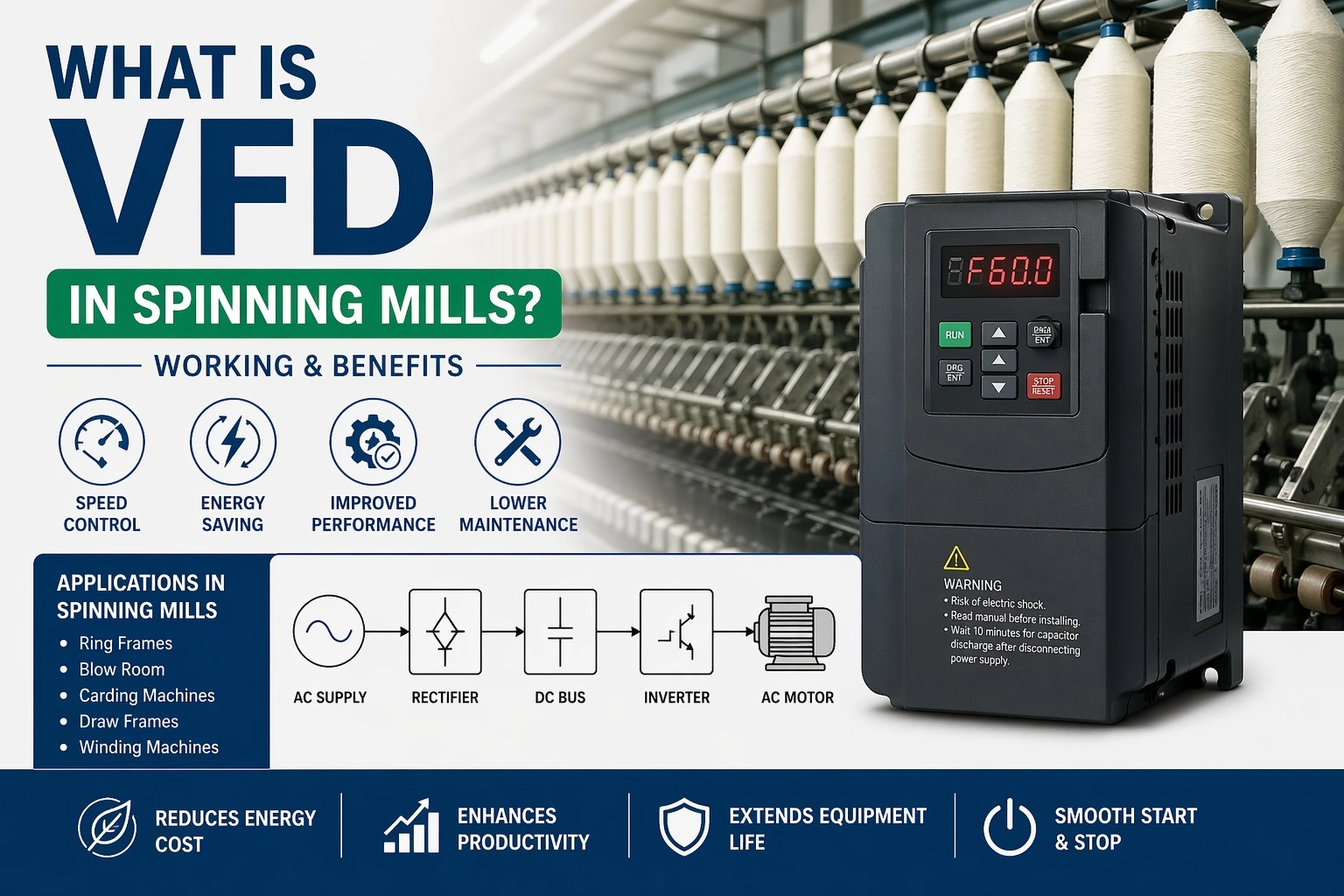
In today's competitive textile industry, energy efficiency and machine performance play a critical role in profitability. One of the most important technologies used in modern spinning mills is the Variable Frequency Drive (VFD).
A VFD helps control motor speed, reduce energy consumption, and improve overall machine efficiency. In this guide, we'll explain what a VFD is, how it works, and why it is essential in spinning mills.
What is a VFD?
A Variable Frequency Drive (VFD) is an electronic device used to control the speed and torque of an electric motor by varying the frequency and voltage of its power supply.
Instead of running motors at full speed all the time, VFD allows operators to adjust speed based on actual production requirements.
How VFD Works in Spinning Mills
n = \frac{120f}{P}
The speed of an AC motor depends on frequency (f) and number of poles (P). A VFD changes the frequency supplied to the motor, thereby controlling its speed precisely.
Basic Working Process:
- Converts AC power to DC (Rectifier)
- Filters the DC power
- Converts DC back to variable AC (Inverter)
- Controls motor speed based on required load
Role of VFD in Spinning Machines
In spinning mills, different machines require different speeds and load conditions. VFD plays a crucial role in:
- Ring frame machines
- Blow room machines
- Carding machines
- Drawing frames
- Speed frame systems
It ensures smooth operation and consistent yarn quality.
Key Benefits of VFD in Textile Industry
1. Energy Saving
VFD reduces unnecessary power consumption by adjusting motor speed based on load.
2. Improved Machine Life
Soft start and stop reduce mechanical stress on motors and components.
3. Better Process Control
Precise speed control improves production quality and consistency.
4. Reduced Maintenance Cost
Less wear and tear means fewer breakdowns and lower repair costs.
5. Increased Productivity
Optimized motor performance improves overall plant efficiency.
Why VFD is Important for Spinning Mills
Energy cost is one of the biggest expenses in textile manufacturing. Using VFD helps:
- Reduce electricity bills
- Improve operational efficiency
- Minimize machine downtime
- Enhance production quality
This makes VFD a must-have technology for modern spinning industries.
Common Applications of VFD in Spinning Industry
- Conveyor systems
- Fans and blowers
- Pumps
- Spindle drives
- Ring frame drive systems
When Do You Need VFD Repair or Service?
You should consider professional VFD repair if you notice:
- Frequent machine stoppages
- Overheating of drives
- Speed fluctuations
- Error codes on display
- Increased energy consumption
Timely repair helps avoid costly downtime.
A VFD is a powerful solution for improving efficiency, reducing energy consumption, and enhancing performance in spinning mills. Whether you are upgrading your system or maintaining existing equipment, understanding VFD is essential for long-term success.
Frequently Asked Questions (FAQ)
VFD is used to control motor speed, reduce energy consumption, and improve machine efficiency in spinning mills.
VFD adjusts motor speed based on load, preventing unnecessary power usage and reducing electricity costs.
Machines like ring frames, blow room, carding, and drawing machines use VFD for speed control.
Common issues include overheating, overvoltage, communication errors, and motor faults.
You should repair VFD when you notice frequent breakdowns, speed issues, or error messages.
